
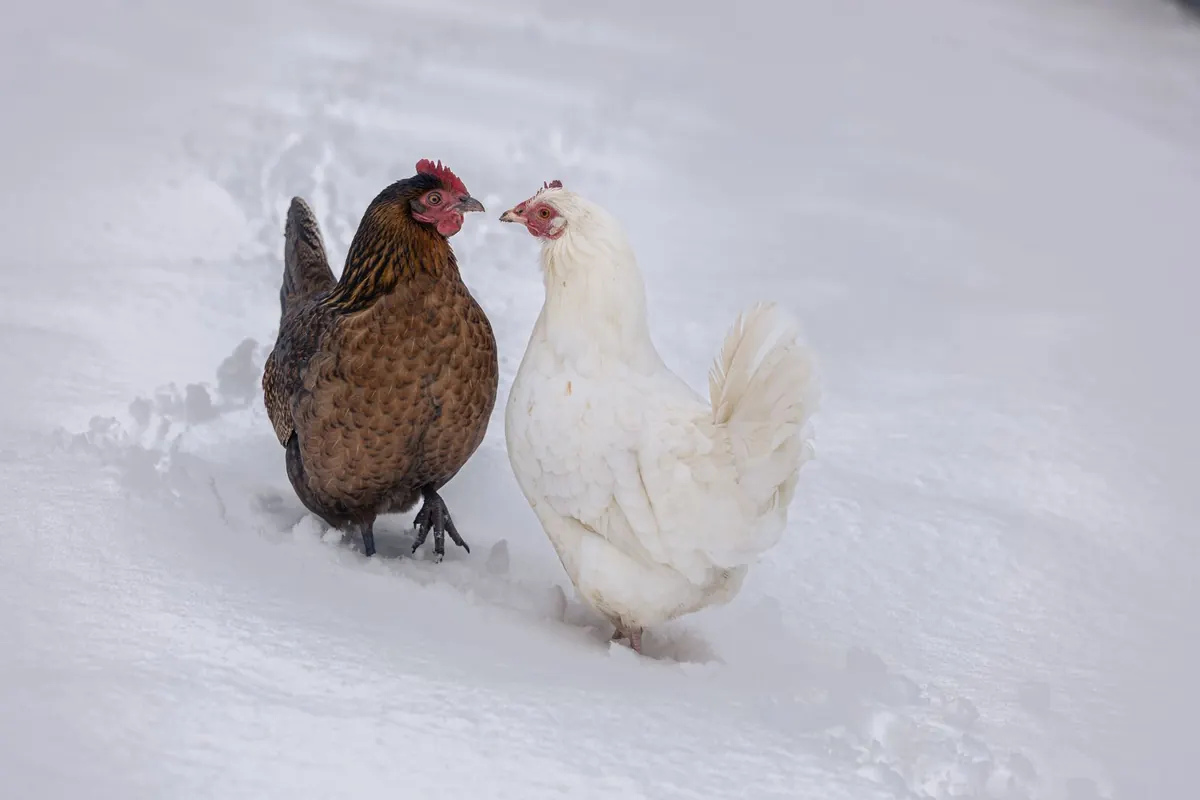
A hen in Vermont and a hen in Georgia are the same bird, but they live very different winters. Chickens handle cold far better than most first-time keepers expect. What they tolerate poorly is wet bedding, a draft at roost height, and a waterer that turns into a block of ice before you've finished your coffee.
If you're setting up your first flock where snow drifts past the fence line, the goal isn't a warm coop. It's a dry, ventilated, wind-blocked coop with birds that go into winter fat and healthy — and a chore list short enough that you'll actually do it on a morning when the thermometer argues with you.
Build the Coop for Winter, Not for Summer
Most beginner coops are sized for a catalog photo. Give each bird three to four square feet of floor space inside, plus eight to ten inches of roost. Crowding holds moisture and ammonia, and a damp coop is far harder on chickens than a cold one.
Roosts should be flat and wide — a two-by-four set on its wide face, not a round dowel. When a hen's toes are covered by her breast and belly instead of wrapped around a pole, frostbitten toes become rare. Place roosts high enough that birds can settle, but not so high that heavy breeds hurt themselves jumping down. A sturdy ramp or a low platform helps.
Ventilation beats insulation
You want insulation, but only if you pair it with ventilation. A coop sealed tight traps moisture from breath and droppings; that damp air frosts combs and causes respiratory trouble. Cut vents high on the wall, above the birds' heads and away from prevailing wind, and leave some open all winter. You should smell fresh air, not ammonia, when you open the door.
Bedding and drafts
Deep bedding — six inches or more of pine shavings or straw — lets you clean less often and gives birds something to scratch through. Add fresh litter on top through the winter and do a full cleanout in spring. Screen off drafts at bird level with stacked straw bales or plywood windbreaks, but never close the upper vents.
Predator-proofing matters just as much in January. Use hardware cloth, not chicken wire, and add a buried apron around the run so foxes don't dig under. Check your town's rules on poultry before you build; limits on roosters and setbacks from property lines vary a lot.
Pick Breeds That Can Take the Cold
Comb size is the single best predictor of frostbite trouble. Breeds with small, tight combs and dense feathering do best in deep cold. Single-comb birds with tall, thin combs are more vulnerable, though with good ventilation and dry bedding many still do fine.
- Barred Plymouth Rock — calm, dual-purpose, handles cold well.
- Wyandotte — rose comb, compact, excellent in snow.
- Buff Orpington — heavy feathering, gentle, decent winter layer.
- Chantecler — bred in Canada for exactly this climate.
- Brahma — big, feathered feet, slow to mature but hardy.
- Australorp — reliable eggs, tolerates cold better than most.
- Dominique — rose comb, thrifty, good foragers.
- Easter Egger or Ameraucana — pea comb, less frostbite risk, colorful eggs.
Skip bantams for your first flock if you're in a hard-freeze area; their small bodies lose heat fast. And if you want eggs through winter, remember that laying slows with shorter days and stops during molt. Some keepers add a few hours of light in the coop; others let hens rest and accept fewer eggs from November to February. Either approach is defensible.
Feeding Through the Cold Months
Chickens eat more in winter because they're burning fuel to stay warm. Keep a complete layer ration available all day and let them eat their fill. Scratch grains like cracked corn offer quick energy and are best given in the late afternoon, so the calories carry birds through the coldest hours. Keep it a treat — no more than a small handful per bird — or you'll dilute the protein and minerals they need for eggs and feathers.
Keep grit and crushed oyster shell available in separate dishes year-round. Feathers regrow after molt, and shells need calcium that a ration alone may not cover.
Water is the whole game
A hen that drinks less eats less, and a hen that eats less stops laying. Frozen water is the most common reason a winter flock goes quiet. Bring a heated waterer or plan to swap a rubber bowl twice a day — metal bowls freeze to your hand and are worth avoiding. Check the water at least once mid-day, not just at feeding time. Never let birds go thirsty to eat snow; that won't meet their needs.
The Daily Routine, Winter Version
- Morning: open the pop door, refill feed, break ice out of water, and watch the flock for a minute. Lethargy, a bird standing hunched with ruffled feathers, or a pale comb all mean something's off.
- Midday: collect eggs. A frozen egg cracks and is no good to anyone. In a hard cold snap, collect twice.
- Late afternoon: scatter a little scratch, top off water one last time, and shut the door before dark.
- Evening: count heads before you latch up. A missing hen is easier to find at dusk than the next morning, and tracks in fresh snow tell you what's prowling.
Cold-Weather Troubles and Fixes
Frostbitten combs: they turn white, then black and crusty. Prevention is dry air, good ventilation, and no drafts on the roost. Some keepers rub a thin layer of petroleum jelly on combs before cold snaps; it can help, but it isn't a substitute for fixing the housing.
Birds refusing to go outside: chickens hate walking in snow. Clear a shoveled path, add a covered run with a windbreak, and they'll come out for fresh air and exercise.
Boredom: a bored flock pecks feathers and squabbles. Hang a cabbage, toss scratch into the deep bedding, and give them somewhere to perch and climb.
Predators: winter is when foxes, owls, and hawks work hardest. Snow shows you exactly what's been visiting, so walk the perimeter after each new snowfall.
If a bird is breathing hard, has a swollen eye, or refuses to stand, don't guess — contact a veterinarian who works with poultry. Health questions deserve more than a forum answer.
Getting Through Your First Winter
Start with a small flock — four to six hens is plenty for a first year — and build the coop before the ground freezes, because digging post holes in January is its own kind of lesson. Aim for dry over warm, full water buckets over cozy insulation, and a routine you can keep on the nastiest morning of the year. Do that, and you'll find that a January coop is one of the quieter, more pleasant places on the property: warm feathers, a few soft clucks, and eggs in the nest box while the snow settles outside.
Photo: Julien GAROT / Pexels