
A feeder in the country draws a different crowd than one in town. Out here you might host chickadees, nuthatches, goldfinches, and a rotating cast of migrating sparrows — along with raccoons, deer, squirrels, and, in much of North America, bears. The setup that works is the one that feeds birds well and gives wildlife nothing worth returning for. That comes down to three decisions: the right feeder, the right food, and a calendar you actually follow.
Read Your Ground Before You Buy Anything
Spend a week watching before you spend a dollar. A yard bordered by a hedgerow and a woodlot pulls in different birds than one sitting in open pasture. Ground feeders like juncos, doves, and sparrows work the grass and gravel; chickadees and finches move through the middle layer; woodpeckers and jays come down from the trees. If there is a creek or pond nearby, expect more traffic overall.
Two placement rules matter more than looks. Hang feeders eight to twelve feet from a shrub or evergreen so birds have somewhere to duck when a hawk comes through — but not so close that a cat can crouch underneath and wait. And put at least one feeder where you can see it from a window you actually sit near. In February, with two feet of snow on the ground, convenience decides whether you keep feeding.
Rural sites are windier than suburban ones, so a pole with a baffle or a cable strung between two trees holds up better than a shepherd's hook in an open yard.
Feeders That Earn Their Keep
You do not need all of these. Start with two and add as you learn what shows up.
- Tube feeder with metal ports. The workhorse. Fill it with black oil sunflower or a sunflower-and-peanut mix and it will pull chickadees, nuthatches, finches, and the occasional woodpecker. Metal ports and a metal hanger resist squirrel chewing.
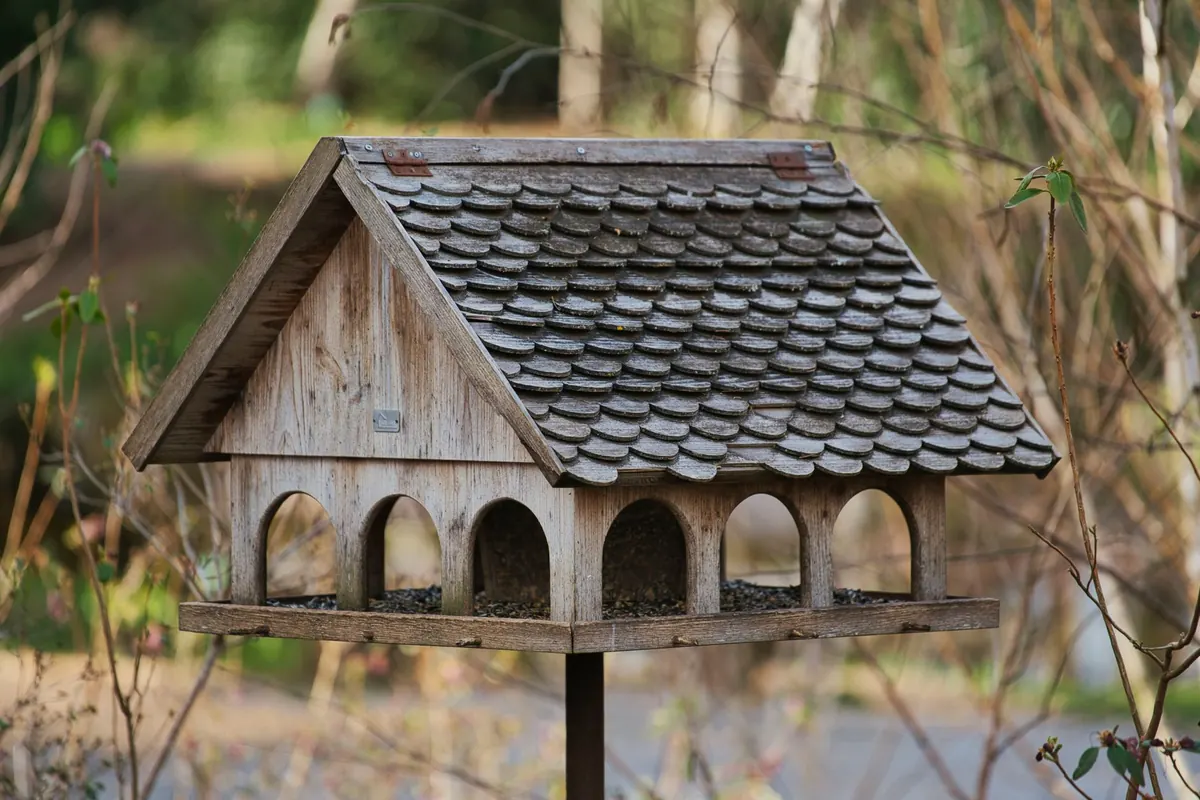
- Hopper or house feeder. Holds a lot, easy to fill, good for cardinals and larger birds. Empty it before the seed in the reservoir cakes up.
- Platform or tray feeder. The best view and the messiest. Good for jays, doves, and cardinals, but only worth using where bears are not a concern; it needs drain holes and regular clearing.
- Suet cage. A cold-weather feeder for woodpeckers and nuthatches. Take it down when daytime temperatures climb into the seventies.
- Nyjer sock or fine-port tube. For goldfinches and siskins. Buy small amounts, since nyjer goes stale quickly.
- Hummingbird feeder. Plain sugar water, one part sugar to four parts water. No dye, no honey. Replace the contents every few days in hot weather.
Squirrels defeat most hardware eventually. A baffle on a pole, positioned so nothing is within jumping distance, buys the most peace.
Seed: Simple Beats Fancy
Black oil sunflower is the best single purchase for most rural yards. It is high in fat, eaten by nearly everything, and the shells are thin enough for small beaks. Hulled sunflower chips cost more but leave far less debris, which matters over a deck or driveway.
Beyond that, keep it narrow. White millet for ground-feeding sparrows and juncos. Shelled, unsalted peanuts for jays and woodpeckers. Suet in cold months. Safflower where squirrels are relentless.
What to skip: bargain mixes loaded with red milo, wheat, and dyed grain. Birds kick most of it to the ground, and that pile is what draws mice, rats, raccoons, and skunks. Store seed in a metal can with a tight lid, inside a garage or shed. In bear country, that is not a suggestion.
The Seasonal Rhythm
Spring
In much of bear country, this is when feeders come down or shift to a strict schedule. Bears leave their dens hungry, and a feeder is an easy, reliable meal. Check with your state or provincial wildlife agency for local timing, which varies widely by region. Elsewhere, spring is for scrubbing everything after winter, switching off suet before it turns rancid, and hanging hummingbird feeders as the first migrants arrive.
Summer
Natural food is everywhere, so birds need your seed less. Water matters more. A shallow birdbath refreshed every day or two will draw more species than a feeder in July. Keep seed amounts small so nothing sits and molds, and clean feeders more often — warm, wet conditions are hard on bird health.
Fall
The best season for watching. Migration brings sparrows, kinglets, and juncos through, and your year-round residents start caching food. Fill feeders ahead of cold fronts, restart suet as nights cool, and expect the mix at your feeders to change every couple of weeks.
Winter
High-fat food wins: sunflower, peanuts, suet. Consistency matters more than volume, because birds build routines and will check your feeder at the same time each day. A heated water source, or a bath you break the ice on twice a day, is one of the most useful things you can offer.
Living With Bears and Other Night Visitors
Bears, raccoons, and rodents are not attracted to birds. They are attracted to seed, grease, and an easy routine. Cut those off and most of the conflict disappears.
- Never put out meat, grease, or sweetened food for birds.
- Rake or sweep beneath feeders weekly. Spilled seed is the real draw.
- Bring feeders in at dusk where raccoons are a problem.
- Keep feeders off porch railings and away from windows and doors.
- If a bear shows up, take feeders down for at least two weeks and clean up every seed on the ground. Repeat visits mean you are still supplying the food.
- Keep cats indoors. Domestic cats are a serious predator of songbirds, and a rural yard gives them plenty of cover.
- Check local regulations; some jurisdictions restrict wildlife feeding.
If you find several sick or dead birds at once, take feeders down for two weeks, clean them thoroughly, and contact your state or provincial wildlife agency for guidance.
Keep the Feeders Clean and the Birds Healthy
Dirty feeders spread disease. Every two weeks — weekly in warm, wet weather — wash them in hot soapy water, then soak them in a mild bleach solution of roughly one part household bleach to nine parts water. Rinse thoroughly and let them air dry before refilling. Empty a feeder completely rather than topping off old seed, and dump anything clumped, damp, or off-smelling. Tray and hummingbird feeders need the most attention; a hummingbird feeder in July should be emptied and rinsed every two
Photo: Sergio Zhukov / Pexels